Nov
04
2009

by

Electronic music V2.0Musica electrónica V2.0

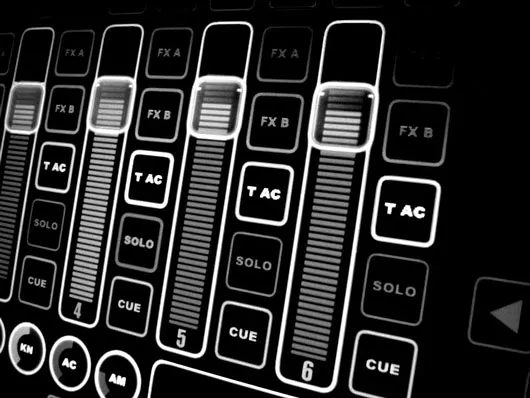
I worked really hard on last months in the new version of MonoTouchLive 3 (not released yet) spending long hours behind my computer monitor. This usually forces me to take short breaks to get some fresh air and sometimes for clear my mind just surf the web just for read something.

Days ago i found this older article (originally written by Dejan Petrovic) i found very interesting.

Electronic Music V2.0

Electronic music celebrates human intellect, progress and unison with technology and science. If we reflect on past and present movements in the styles of electronic music, we see that it has always been about the future and futurism. Composers and producers have always strived towards the science fiction themes, futuristic sounds, electronic elements, analogue sounds and finally celebrating digital music expression as means of setting the background for what is about to come. Robert Moog

The very nature of electronic music is about anticipation of the technological equilibrium. The question is what will happen to this music style as a global phenomenon once we reach the common goal.

a) It might disappear as an active music style and be recorded in libraries as an interesting post-industrial phenomenon.

b) All electronic music might take a new form and become very complex so that it might not be comprehensible by contemporary human.

c) It could continue to self-perpetuate or turn into a primitive music expression in form of a tribute to our achievements.

Some academics speculate that we are at that stage where momentum of technological development is so great that there is no point of return for the humanity as we know it.

“Ultimately we will merge with our technology. As we get to the 2030s, the non-biological portion of our intelligence will predominate. By the 2040s it will be billions of times more capable than the biological part”

Two years ago (in 2003), Time magazine organised a conference called “Future of Life” as a celebration of Watson – Creek’s discovery of the structure of DNA. All the speakers at this event were asked what they thought next fifty years would bring and an interesting comment came from Ray Kurzweil, who took an optimistic approach and pointed out that most of the predictions were rather shortsighted. In his piece for the New Scientist, Kurzweil explains that the most common mistake futurists make is that everyone reflects on the past fifty years when making projections for the next half a century, and calls this phenomenon an “intuitive linear” view, where it is assumed that the current rate of progress will continue to apply in the future. After assessing the history of technological developments, Kurzweil argues that the progress has always been exponential and justifies this by monitoring various aspects of this progress, for example, reflecting on different timescales and taking into consideration a wide variety of technologies, ranging from electronic to biological, sum of human knowledge and economic implications.

We have a very powerful statement here – it almost summarises the essence of electronic music. Whether these views are a bit too optimistic or not, it looks like humankind has taken evolution to a next level and it is not about to slow down or reverse – or is it?

“We are making exponential progress in every type of information technology. Moreover, virtually all technologies are becoming information technologies. If we combine all of these trends, we can reliably predict that, in the not too distant future, we will reach what is known as The Singularity This is a time when the pace of technological change will be so rapid and its impact so deep that human life will be irreversibly transformed. We will be able to reprogram our biology, and ultimately transcend it. The result will be an intimate merger between ourselves and the technology we are creating.”

In Foundation series, Isaac Asimov introduces the concept of psychohistory, a scientific method of predicting the future by observing masses rather than particles of large and chaotic systems. Kurzweil uses this analogy and gives an example of predictable properties of gasses by utilising the laws of thermodynamics and our inability to predict movement of their rather chaotic and quite unpredictable particles. In his views, information technology is just as predictable. However if you are to make accurate predictions of human development you must take into account our very human nature which hasn’t changed significantly since the tribal times.

Socio-economic developments are usually lagging behind and slowing down the exponential progress of technology and science. Right now, we are in relatively balanced west-east relation between the rich, poor and the middle class. This can however, turn around with the next major economic crash, which could be self-initiated or caused by natural effects. When big economies start running out of momentum there will be more wars and more Divide et impera (divide and conquer, divide and rule) scenarios, recently seen in Balkans and Middle East, and when that’s not enough – there will be another global war. This ‘dark era’ is also covered in many, mainly mature, styles of electronic music. Post-apocalyptic scenarios have always been one of the favourite themes for techno authors, science fiction film directors, computer game producers and animators – especially in European and Japanese and animation schools.
The consensus is that electronic music always takes slightly darker path, especially with the more sophisticated or complex sub-styles (IDM, electornica, deep techno, goa, experimental) with couple of exceptions in some cheerful but brainless directions this music took, such as happy hard core.
Before it goes back to the pessimistic motif, electronic music will take a new direction and break away from the apocalyptic theme. This age will be known as the second renaissance of music and art and will go in line with the momentum of technological developments. Let’s hope Kurzweil was correct and our generation will be part of the beginning of the stage two.

Electronic Music V2.0
by Dejan Petrovic

Reference: “Human life: The next generation, 24 September 2005, NewScientist.com news service, Ray Kurzweil”

He trabajado muy duro en los últimos meses en la nueva versión de MonoTouchLive 3 (no lanzada todavía) pasando mucho tiempo detrás del monitor de mi computadora. Esto por lo general me obliga a tomar pausas para tomar aire fresco y a veces para aclarar mi mente simplemente navego por la web sólo para leer algo.

Hace días encontré este viejo artículo (escrito originalmente por Dejan Petrovic), y me parecio muy interesante.

Música Electrónica V2.0

La música electrónica celebra el intelecto humano, el progreso al unísono con la tecnología y la ciencia. Si reflexionamos sobre los movimientos pasados y presentes en los estilos de la música electrónica, vemos que siempre se trato sobre el futuro y el futurismo. Compositores y productores siempre se han orientado hacia los temas de ciencia ficción, sonidos futuristas, elementos electrónicos, sonidos analógicos y, finalmente, la celebración de la expresión de la música digital como forma de fijar el fondo de lo que está por venir.

Robert Moog

La naturaleza misma de la música electrónica trata de la anticipación del equilibrio tecnológico. La gran pregunta es qué va a pasar en el futuro con este estilo de música como un fenómeno global.

a) Podría desaparecer como un estilo de música activa y se registrarán en los libros como un interesante fenómeno post-industrial.

b) Toda la música electrónica podría tomar una nueva forma y se vuelveria muy compleja, de modo que no podría ser comprensible por el humano contemporáneo.

c) Podría perpetuarse o convierse en una expresión de la música primitiva en forma de un homenaje a nuestros logros.

Algunos académicos especulan que estamos en una fase donde el impulso del desarrollo tecnológico es tan grande que no hay punto de retorno para la humanidad como la conocemos.

“En última instancia nos fusionaremos con nuestra tecnología, a medida que lleguemos al 2030, la parte no biológica de nuestra inteligencia predominará. En la década de 2040 será miles de millones de veces más capaz que la parte biológica”

Hace dos años (en 2003), la revista Time organizó una conferencia titulada “Futuro de la Vida” como una celebración para Watson – Creek por el descubrimiento de la estructura del ADN. A todos los oradores en este evento se les preguntó qué pensaban de los próximos cincuenta años, y un comentario interesante vino de Ray Kurzweil, que adoptó un enfoque optimista y señaló que la mayoría de las predicciones son bastante miopes. En su artículo para el New Scientist, Kurzweil explica que el error mas común de los futuristas, es que todo el mundo reflexiona sobre los últimos cincuenta años al hacer las proyecciones para el próximo siglo y medio, y llama a este fenómeno un “intuitivo lineal” punto de vista, donde se supone que la tasa actual de progreso, se seguirá aplicando en el futuro. Después de evaluar la historia de la evolución tecnológica, Kurzweil sostiene que el progreso siempre ha sido exponencial y lo justifica por varios aspectos de seguimiento de este progreso, por ejemplo, la reflexión sobre diferentes escalas de tiempo y teniendo en cuenta una amplia variedad de tecnologías, que van desde la electrónica a la biológica, la suma del conocimiento humano y las consecuencias económicas.

Tenemos una declaración muy fuerte aquí – casi resume la esencia de la música electrónica. Si estos puntos de vista son un poco o demasiado optimistas o no, parece que la humanidad ha tomado el siguiente paso hacia la evolución y esto no se va a retrasar o revertir – ¿o no?

“Estamos haciendo progresos exponenciales en todo tipo de tecnologías de la información. Además, prácticamente todas las tecnologías se están convirtiendo en tecnologías de la información. Si combinamos todas estas tendencias, se puede predecir con fiabilidad que, en un futuro no muy lejano, vamos a llegar a lo que se conoce como la singularidad, un momento en que el ritmo del cambio tecnológico será tan rápido y su impacto tan profundo que la vida humana se transforma en forma irreversible. Podremos volver a programar nuestra biología, y en última instancia, más allá de ella. El resultado será una fusión íntima entre nosotros y la tecnología que estamos creando"

En la novela Fundación, Isaac Asimov introduce el concepto de la psicohistoria, un método científico de predecir el futuro mediante la observación de las masas en lugar de partículas de sistemas grandes y caóticas. Kurzweil utiliza esta analogía y da un ejemplo de las propiedades de los gases predecibles mediante la utilización de las leyes de la termodinámica y nuestra incapacidad para predecir el movimiento de sus caótica y bastante impredecibles partículas. En su opinión, la tecnología de la información es predecible. Sin embargo, si se desea hacer predicciones exactas del desarrollo humano, se debe tener en cuenta nuestra propia naturaleza humana que no ha cambiado significativamente desde los tiempos de las tribus.

El desarrollo socio-económico por lo general demora y ralentiza el avance exponencial de la tecnología y la ciencia. En este momento, estamos relativamente equilibrados en relación ricos-pobres y la clase media. Sin embargo, esto pudiera cambiar con la proxima crisis económica, que podría ser auto-iniciada o causada por efectos naturales. Cuando las grandes economías comiencen a quedarse sin impulso habrá más guerras y más "Divide et impera" (divide y vencerás, divide y mandaras), como en escenarios vistos recientemente como en los Balcanes y Medio Oriente, y cuando eso no sea suficiente – habrá otra guerra mundial. Esta “época oscura” también cubre muchos y principalmente maduros, estilos de la música electrónica. Escenarios post-apocalípticos siempre ha sido uno de los temas favoritos de los autores techno, películas de ciencia ficción de los directores, los productores de juegos de computadoras y animadores – especialmente en Europa y Japón en sus escuelas de animación. El consenso es que la música electrónica siempre toma un camino un poco más oscuro, especialmente en los ámbitos más sofisticados o complejos estilos como IDM, electornica, techno profundo, Goa, experimental, con algunas excepciones en algunas direcciones, alegres pero sin cerebro como el happy hardcore. Antes de que se regrese a la motivación o inspiración pesimista, la música electrónica tendrá una nueva renovacion al romper con los temas apocalípticos. Esta edad se conoce como el segundo renacimiento de la música y el arte y va en consonancia con el impulso de los avances tecnológicos. Esperemos Kurzweil este en lo correcto y que nuestra generación sea parte del comienzo de la segunda fase.

Electronic Music V2.0
by Dejan Petrovic

Referencia: “Human life: The next generation, 24 September 2005, NewScientist.com news service, Ray Kurzweil”

Traduccion y adaptacion al castellano: Pablo Martin

27 Comments »

  • t appears that you have placed a lot of effort into your article and I require more of these on the net these days. I sincerely got a kick out of your post. I don’t really have much to say in response, I only wanted to comment to reply wonderful work.

  • Hi buddy, your blog’s design is simple and clean and i like it. Your blog posts are superb. Please keep them coming. Greets!!!

  • Pablo says:

    Thankyou Matthew !

  • Darin Acal says:

    This is a very cool article, I could not have agreed more.

  • That rss page on your blog here is magnificent, you should tell people about it in your upcoming post. I haven’t noted it a first, now I’m using it every morning to check on any updates. I’m on a very slow dial-up link in Kentucky and it’s quite baffling to sit there and wait for such a long time ’til the page loads… but hey, I just found your rss page and added it to the Google Reader and voil? – I’m always up-to-date! Well buddy, keep up the good work and make that rss button a little bigger so that other people can enjoy that as well :-P

  • What’s shakin’?
    I enjoyed you article. I’m glad Bing pointed me to it. I was able to get the information I was looking so badly for days now. Thanks again for your great post. Regards, Willrett Nakisha \Kellie Tracy Imes

  • Andrew Pelt says:

    Zune and iPod: Most people compare the Zune to the Touch, but after seeing how slim and surprisingly small and light it is, I consider it to be a rather unique hybrid that combines qualities of both the Touch and the Nano. It’s very colorful and lovely OLED screen is slightly smaller than the touch screen, but the player itself feels quite a bit smaller and lighter. It weighs about 2/3 as much, and is noticeably smaller in width and height, while being just a hair thicker.

  • You write really well articles but where is the source?

  • Pablo says:

    Read at the end of article:

    Electronic Music V2.0
    by Dejan Petrovic

  • Looks like these guys have plenty of outsourcing opportunities available.

  • [...] Whitney Houston. According to the Morris County Daily Record, Houston has a $1 million mortgage toPablo Martin Electronic music V2.0… an interesting comment came from Ray Kurzweil, who took an optimistic … Name (required) Mail [...]

  • viral submitter pro says:

    Hey from Canada! I have found your link on askjeeves. Useful content! Helen J. Schoolcraft x

  • Richard Crawmer says:

    Thanks for making the effort to publish this. I understand where you are originating from on this post but I believe that there are more attractive options.

  • Wilmington says:

    Interesting, I wonder what the statistics are on your first point there…

  • Great info! I recently came across your blog and have been reading along. I thought I would leave my first comment. I don’t know what to say except that I have enjoyed reading. Nice blog. I will keep visiting this blog very often. http://www.news-gate.info

  • Uknowit says:

    Hi, I’ve been a lurker around your blog for a few months. I love this article and your entire site! Looking forward to reading more, keep it coming! I’ve gone ahead and bookmarked.

  • interesting take on the subject, count me as a new subscriber!

  • I love your take on this, could not agree more.

  • Bobbie Laflame says:

    very good insight, I really enjoyed reading this, keep it up!

  • Abdul Murel says:

    I couldn’t agree more, thanks for writing.

  • Libby Lipskar says:

    excellent post, you must got another subscriber ;-)

  • Nicol Fedele says:

    awesome post dude

  • appreciated lots, I am obliged to comment that your site is excellent!

  • Wow! Thank you! I always wanted to write in my site something like that. Can I take part of your post to my blog?

  • Tate32Rhonda says:

    If you want to buy real estate, you will have to get the loans. Moreover, my father always uses a commercial loan, which occurs to be the most fast.

  • essay says:

    There is not another good way to have A+ than to complete the essay but that is, also, good to buy the technology essays paper at the essay writing service scam.

RSS feed for comments on this post. TrackBack URL


Leave a Reply

ad ad ad ad


adsense

Copyright 2005-2009 Pablo Martin